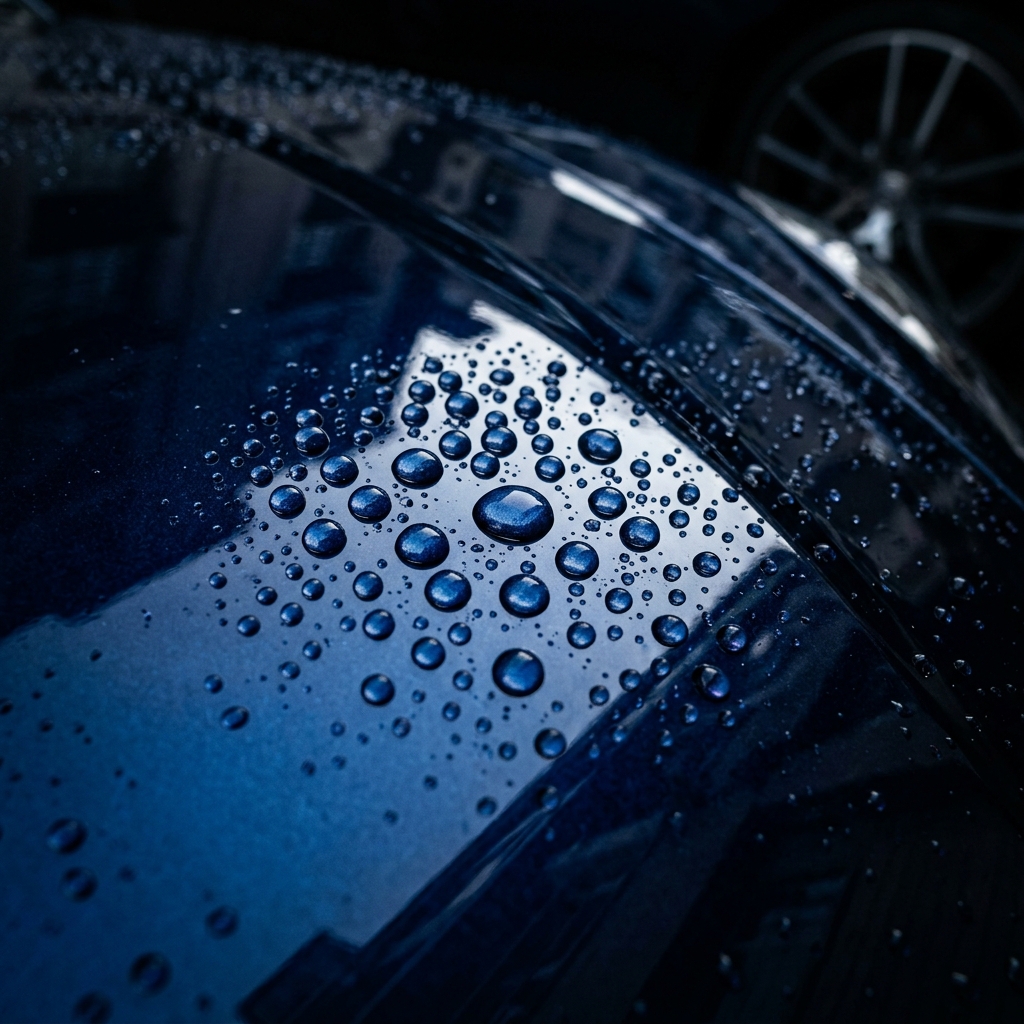
It's a question that sparks genuine debate in every detailing forum, Facebook group, and body shop waiting room: how long do you actually have to wait after a paint job before ceramic coating or PPF? Answers range from "a week is fine" to "90 days, no exceptions" — and every single person giving those answers is confident they're right.
The frustrating truth is that they can all be correct. The timeline isn't arbitrary — it's governed by real chemistry, and the right answer for your specific vehicle depends on specific variables. This guide breaks down exactly what those variables are, what's actually happening inside fresh paint, and gives you a clear framework for making the right call.
The Root Cause: Paint Off-Gassing
When a vehicle comes out of a spray booth, the surface paint feels dry — sometimes within hours. But "dry to the touch" and "fully cured" are two completely different states.
Modern automotive paint is built in layers: a primer coat, a base color coat, and a clear coat on top. Each layer is formulated with solvents, water vapor (in waterborne systems), and reactive chemicals that trigger a cross-linking curing reaction. As the paint cures, these trapped compounds slowly evaporate outward through the paint surface — a process called off-gassing (or outgassing).
This process cannot be rushed simply by waiting in a warm space. The chemistry continues at the molecular level, deep inside the paint layers, for weeks to months depending on conditions.
The Variables That Control Your Cure Timeline
This is why you'll get different answers from different detailers — they're describing different scenarios. Here's the full picture:
| Variable | Faster Cure | Slower Cure |
|---|---|---|
| Baked in oven | Yes — dramatically accelerates off-gassing | No bake = weeks longer minimum |
| Paint formulation | Modern waterborne basecoat | Older solvent-based systems |
| Climate & temperature | Hot, dry (Utah desert summers) | Cold, humid (northern winters) |
| Shop quality | Professional multi-stage prep & application | Mobile repair, thin coats, poor prep |
| Number of coats | Single-stage paint | Multi-coat base + clear system |
| Bake cycles | Multiple high-temp bake sessions | Single cycle or air-cure only |
The Baking Factor — The Single Biggest Variable
Most professional body shops use a heated spray booth that bakes the paint at elevated temperatures (typically 140–160°F) immediately after application. This forces the solvents to evaporate far faster than they would at room temperature, compressing a 90-day cure window down to 30 days or less.
This is why a detailer in Phoenix quoting 7–14 days and a detailer in Minnesota quoting 90 days can both be telling the truth: the Phoenix job was baked at a desert shop; the Minnesota job was air-dried in a cool, humid garage.
- "Was the paint baked in a spray booth oven?"
- "What temperature and how many cycles?"
- "What is your recommended cure time before PPF or ceramic?"
Ceramic Coating: The Specific Timeline & Why It Matters
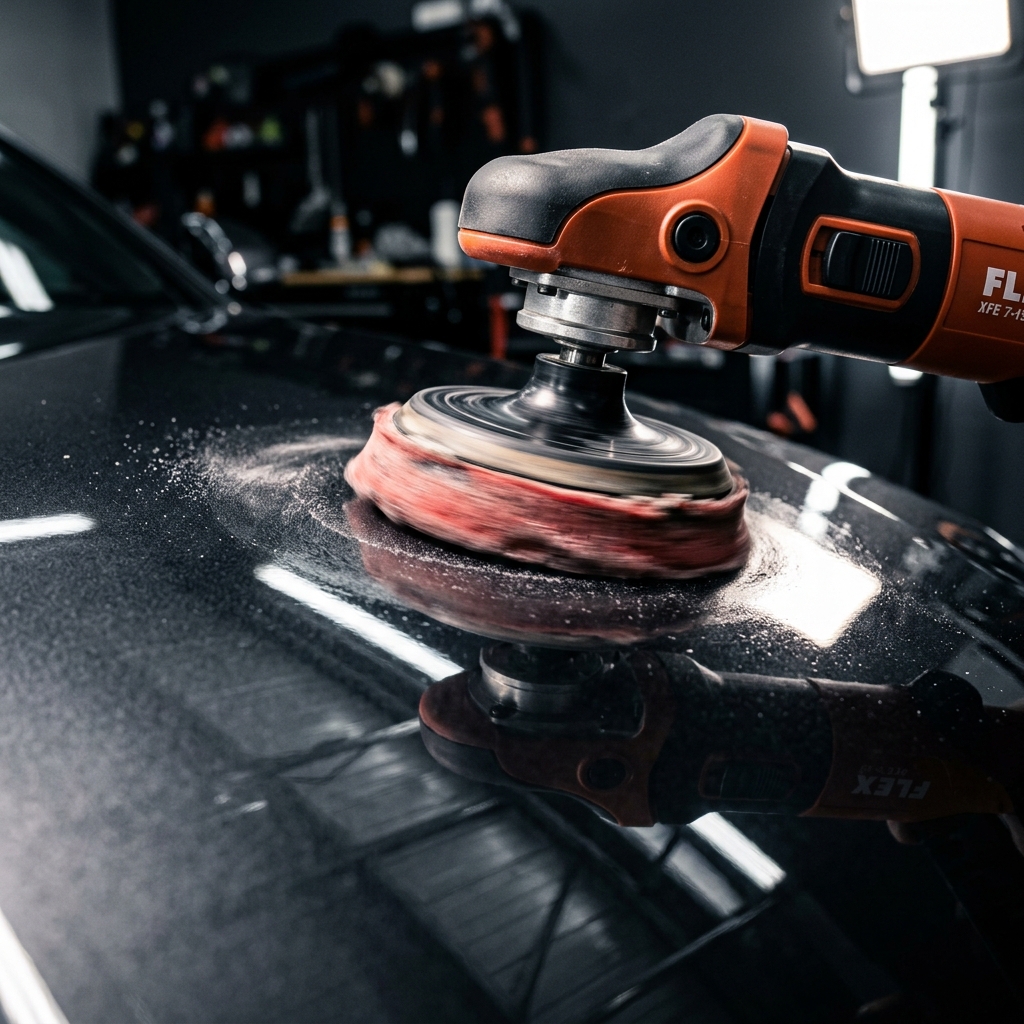
Ceramic coatings — like our NanoPro® system — cure to an ultra-hard 9H silicon-dioxide (SiO₂) nano-crystal layer that permanently bonds to your clear coat. Once set, this layer is largely impermeable.
That impermeability is the risk on fresh paint. Off-gassing vapors pushing outward hit the hardened ceramic shell with no escape route, creating micro-pressure pockets. Depending on the severity, this shows up as:
- Visible bubbles or blisters in the coating
- Pinholes and fish-eye patterns
- Sections of coating that flake or separate
- Cloudiness or loss of gloss depth
None of these failures are covered by the coating warranty, because the root cause was the condition of the substrate — not the product itself.
Ceramic Coating Recommendation
PPF: Why the Risks Are Mechanical, Not Just Chemical
Paint Protection Film (PPF) is a semi-porous urethane film, which means it does allow some continued off-gassing to occur beneath it — unlike a ceramic coating. On paper, this sounds like PPF is safer to apply sooner.
But the real danger with PPF on fresh paint isn't the off-gassing. It's the installation process itself.
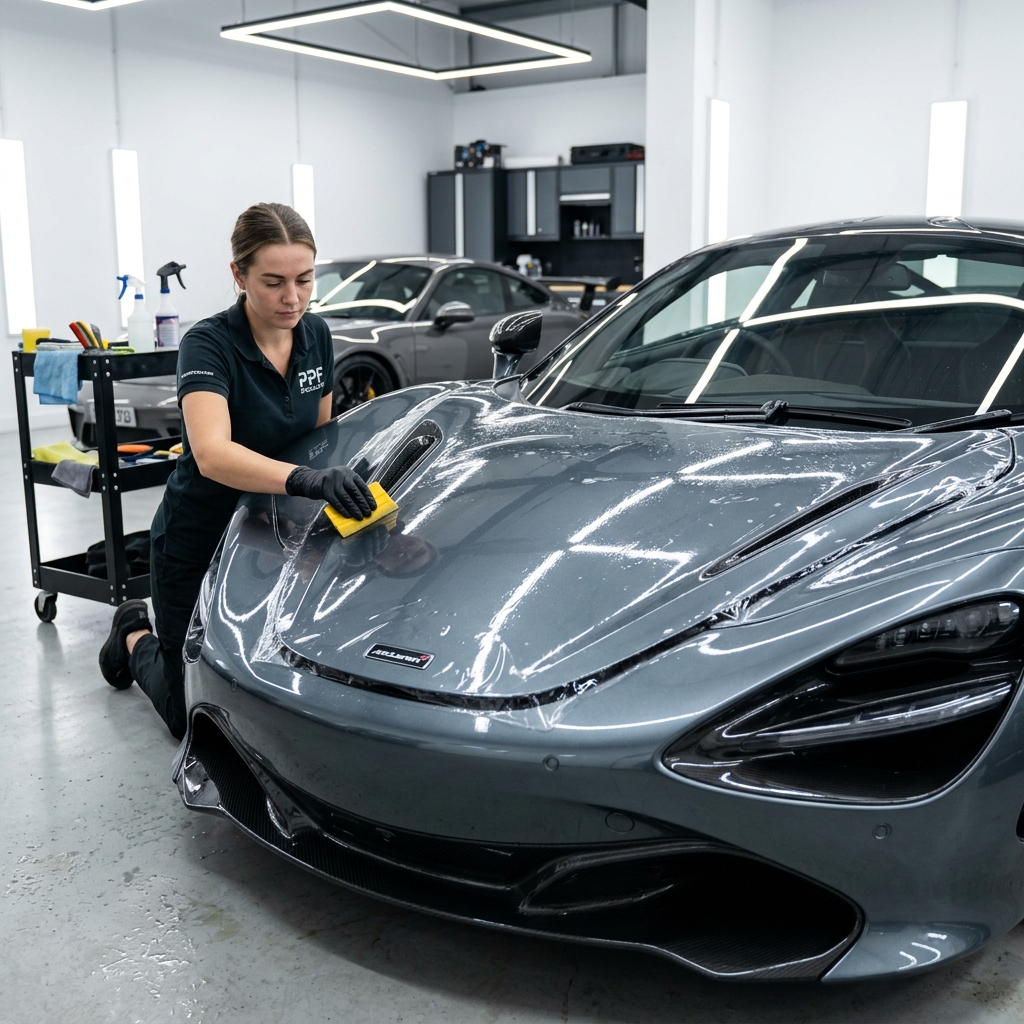
A professional PPF install involves:
- Heat guns — used to stretch the film around curves and edges, this heat simultaneously softens the film and the paint beneath it
- Squeegee pressure — firm, repeated passes across the panel surface
- Adhesive pull — the film's adhesive bond must anchor to the surface; if the paint isn't fully hardened, the adhesive can exceed the structural strength of the paint layers
- Future removal — when PPF is eventually replaced (typically 7–10 years), insufficiently cured paint at install time can peel away with the film
This is exactly what happened at Perry's car show: the PPF installers didn't know the car had just been painted. The partially-cured paint delaminated during installation — a $15,000 problem that was entirely preventable.
PPF Recommendation
One more point on the "good paint job is ready immediately" argument: an experienced installer with a high volume of work has the judgment to push the boundary on baked paint from a shop they trust. For a one-time custom paint job on your personal vehicle, that judgment doesn't apply — the risk-to-reward ratio doesn't justify it.
What Can You Safely Do During the Cure Window?
Waiting doesn't mean leaving your fresh paint completely exposed. There are safe steps you can take during the cure period.
Safe During Cure
- Breathable paint sealant (cure-safe formulas) — provides light protection without sealing off the off-gassing process
- Gentle hand wash with pH-neutral shampoo after 30 days
- Indoor climate-controlled storage — minimizes UV and environmental exposure
- Breathable satin indoor car cover (not plastic-backed) for dust protection in a clean space
- Detailing spray or quick detailer for light dust removal
Avoid During Cure
- Ceramic coating or graphene coating — creates an impermeable barrier that traps off-gassing vapors
- Traditional wax (carnauba) — relatively impermeable, same concern
- PPF installation — mechanical stress on uncured paint
- Automatic or tunnel car washes — rotating brushes and high-pressure water
- Plastic-backed or non-breathable car covers — can trap moisture against fresh paint
- Pressure washing directly at panels
The Car Cover Question
Storing your freshly painted car and wanting to throw a cover over it is instinctive. But it's worth thinking through carefully.
The concern isn't the cover itself — it's moisture. If a non-breathable cover (polyester-backed, plastic-lined) is placed over fresh paint in any environment with humidity, that moisture gets trapped against the surface for weeks at a time. This can cause water spotting, mildew, and in worst cases, paint adhesion issues.
For a climate-controlled warehouse with low humidity: no cover is actually the safest option. The paint just needs time and air. If dust protection is needed, use a proper premium indoor car cover — specifically designed to be breathable, such as a satin or micro-woven cover with no plastic backing.
How We Handle Fresh Paint at Swags Auto Lab Heber City
When a customer brings us a freshly painted vehicle for ceramic coating or PPF, this is our protocol — no exceptions:
- We ask for documentation from the body shop: paint system used, bake process details, and the shop's own recommended cure time.
- Baked, professional paint job: We'll proceed at 30 days with a full inspection and a customer liability acknowledgment on file.
- Non-baked or unknown process: We recommend 60–90 days, and we hold firm on that regardless of scheduling pressure.
- High-value custom work ($10k+): 90 days minimum. No exceptions. The cost of waiting is zero. The cost of a botched install on a $15k paint job is not.
We'd much rather schedule a callback conversation than have a customer's investment fail on our install table. If your body shop is pushing you toward a faster timeline and you're not sure, give us a call — we're happy to review the specifics of your situation at no cost.
Frequently Asked Questions
Can I ceramic coat my car right after painting?
No. You should wait a minimum of 30 days for baked paint and 60–90 days for non-baked paint. Applying a ceramic coating too soon traps off-gassing vapors beneath the hardened ceramic layer, causing bubbling, fish-eyes, or delamination.
Is PPF different from ceramic coating in terms of wait time?
The recommended timelines are similar (30–90 days depending on bake), but the failure modes are different. PPF risk is primarily mechanical — heat, pressure, and adhesive pull during installation can damage under-cured paint. Ceramic risk is chemical — trapped off-gassing vapors push against the hardened coating.
What if my body shop says it's fine after 2 weeks?
Body shops giving a 2-week clearance are almost certainly describing baked paint from a heated spray booth — in a warm climate. Always verify: was it baked, at what temperature, for how many cycles? If you're unsure of any of those answers, default to 30–60 days minimum.
How do I know if my paint was baked or air-dried?
Ask your body shop directly. Any professional shop using a dedicated spray booth oven will be able to tell you their bake process and temperature. Mobile repairers, smart repair specialists, and some budget shops do not have heated booth facilities — their paint is air-dried and requires the longer cure window.
Can I wax my car while waiting for ceramic or PPF?
Traditional carnauba wax creates a relatively impermeable barrier and is not recommended during the cure window. A dedicated breathable paint sealant is a better option if you want some protection while you wait.
Ready to Protect Your Investment the Right Way?
Whether you're planning ahead after a fresh paint job or your car has fully cured and you're ready to go, Swags Auto Lab Heber City is Heber City's certified NanoPro® ceramic coating and PPF installation center. We'll give you an honest assessment of your vehicle's readiness — and when the time is right, deliver a flawless result.
